Hiking: NP Blidinje, Hajdučka vrata
Starts from: BlidinjeFlying & Air Gliding: Adriatic hinterland
Starts from: LivnoMTB: Jahorina & Trebević Slopes
Starts from: SarajevoExcursion: Kravica waterfall & West Herzegovina
Starts from: MostarHiking: NP Sutjeska, Maglić peak
Starts from: Tjentište (Foča)Rafting: Una river
Starts from: Bihać

Sources
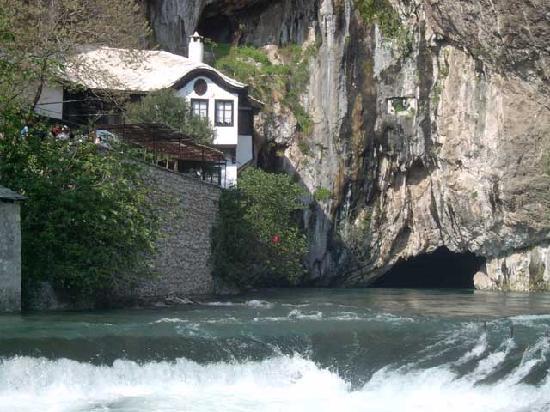
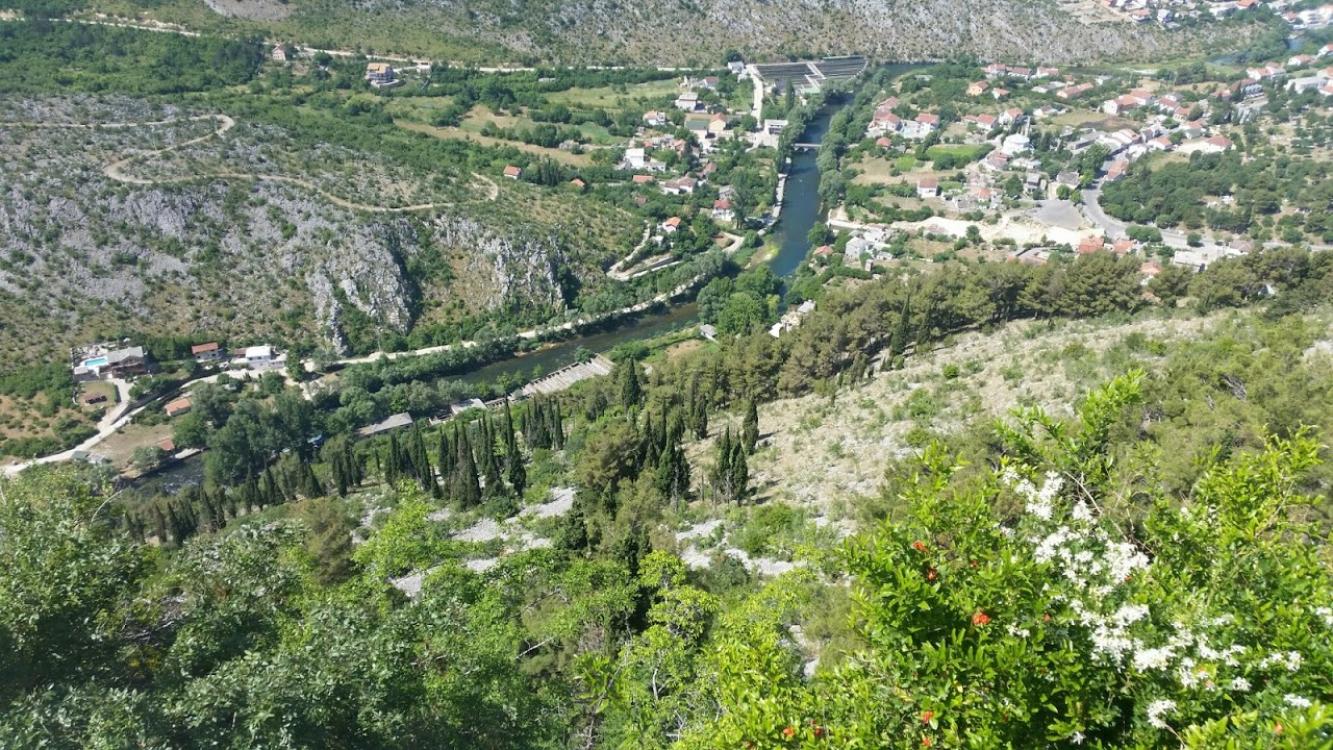
Vrelo Bune is the source of the Buna river is a strong karstic spring. The river flows west for approximately 9 kilometres and joins the Neretva near the village Buna. The historic site of the Old Blagaj Fort (Stjepan grad), on the hill above Blagaj, was the seat of Herzegovinian nobleman, Stjepan Vukčić, and the birthplace of Bosnian queen Katarina Kosača-Kotromanić.
Architecture
The earliest Blagaj settlement was located at the foot of the Blagaj fort, where the road runs down from the fort and intersects with the Nevesinje road. There was too little trade for a commercial centre to emerge and in an agricultural environment of this kind the circumstances did not give rise to an urban settlement.The urbanization of the area (in the form we know today) was defined in the second half of the 15th century, and its structure was shaped during the 16th century
Historical sources frequently refer to mediaeval fortress Blagaj Fort (Stjepan grad) as a distinct territorial entity. During the Ottoman period construction of buildings was initiated in the fortress outskirts (houses and public edifices. The residential areas were formed as urban quarters or mahalas, with buildings facing inwards - onto their courtyards. Resident complexes display evidence of a high standard of living and the Velagić house complex is one of the most valuable of this type in Herzegovina. The town mostly developed along the right bank of river Buna because the left bank is somewhat steeper and less suitable for construction.
Public buildings were positioned quite deliberately within the urban structure as a whole. Among the first edifices was the Careva (Imperial) mosque constructed in 1521, which helped the settlement acquire the status of kasaba. It was followed by the construction of Karađoz-beg bridge from 1570 and then the Leho bridge. Using bold structural solutions played a vital role in architecture of Blagaj: addition of pillars and vaults, along with other structural elements, is quite evident. Barrel vaults, which were common in mosques, the tekke and the hammam – were raised to a high degree of perfection and made an entirely free ground plan possible. The synchronization of artisan crafts and construction techniques on the one hand and the development of the settlement on the other has left a mark on the Blagaj's image as a distinctive urban centre in Bosnia and Herzegovina.
During the reign of Austro-Hungarian Empire, Blagaj still retained its oriental-settlement character in its overall appearance as well as in its architectural and compositional details despite the obvious deterioration of the urban fabric.